

This is a crosspost of this tweet thread.
Thread on Mythos's AI R&D abilities (via system card).
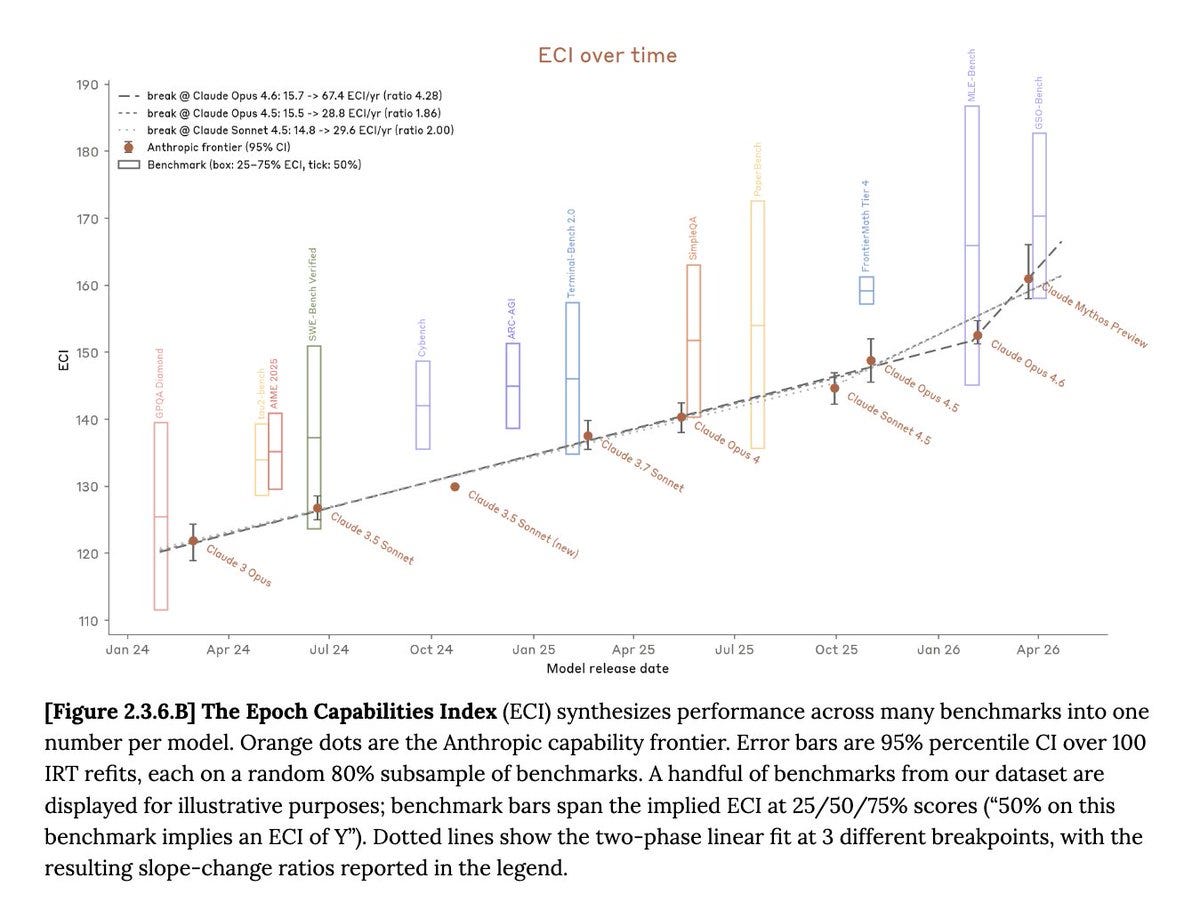
It looks like a trend break based on an internal version of "ECI," a technique for aggregating benchmark scores.
Unlike recent releases, Mythos is more expensive than the previous SOTA; it's ~5x more expensive than Opus.
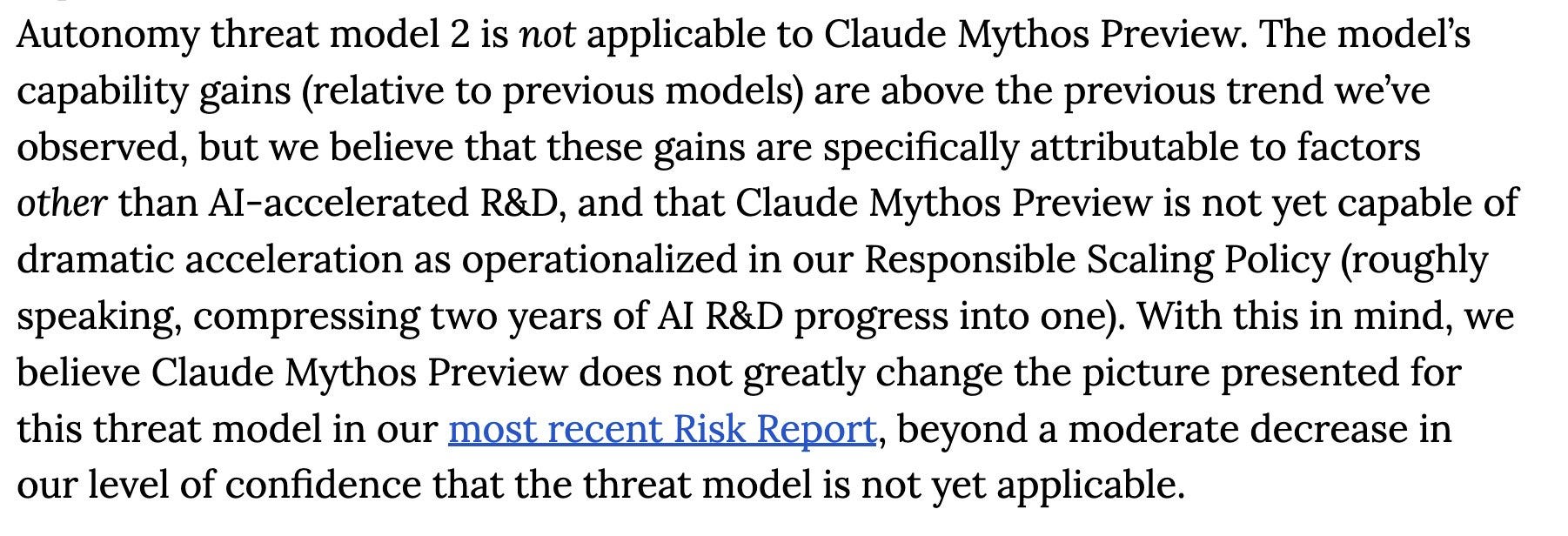
Anthropic argues that despite the 2-4x ECI slope increase, they haven’t reached their RSP threshold of AI R&D automation doubling the pace of AI progress, because they can attribute the acceleration to factors besides Mythos.
Evidence includes:
a) The AIs used when building Mythos (not Mythos itself!) didn’t contribute to the advances that Mythos represents.
b) An n=18 survey gave an aggregate estimate of 4x productivity uplift from Mythos, which when plugging into Anthropic’s internal modeling, results in <2x overall progress speedup.
c) Some initial impressive claims about Mythos’s abilities turned out to be “smaller or differently shaped than initially understood.”
Anthropic is probably right here, but alarm bells should be going off! Our processes are not ready to handle an intelligence explosion and we appear to be going full-steam ahead toward one. Meanwhile, non-Anthropic companies probably have still more inadequate processes.
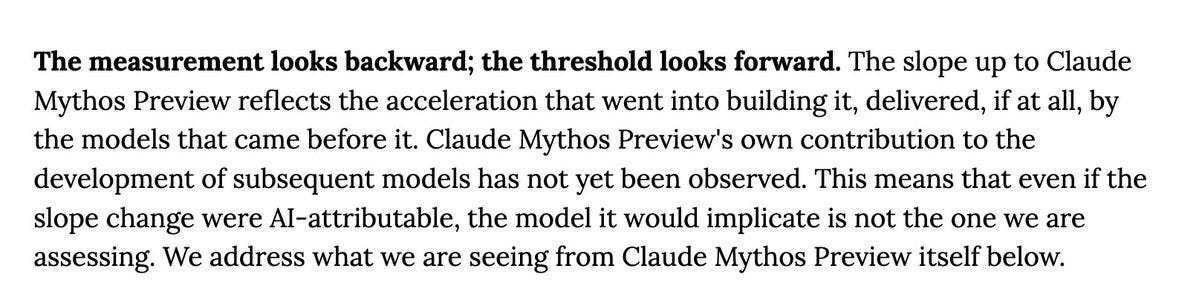
Anthropic claims that the pictured bullet point is a 4th independent reason against Mythos causing the 2x slope increase. It says that even if the acceleration were from automation, that would reflect on previous models, not Mythos.
I'm confused: this would mean that, given we know Mythos is more capable than previous models, we should have an even higher estimation of Mythos's abilities!
Maybe someone can clarify.
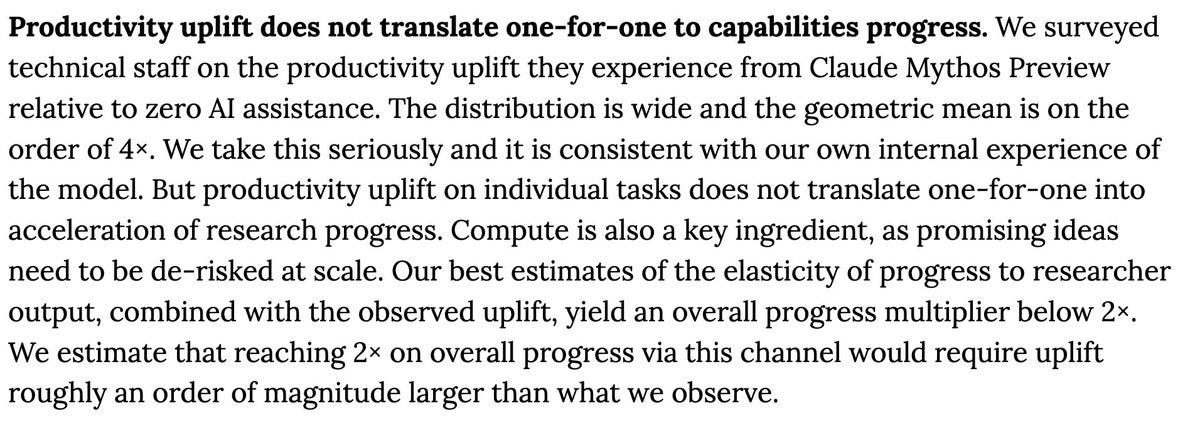
Anthropic says that while current productivity is 4x, with their “elasticity” estimate a 40x would be needed to 2x overall progress. I’m guessing that overall progress means something like ECI/effective compute i.e. including training compute scaleup, rather than algorithmic/software progress in particular.
I’d be very interested in more details on Anthropic’s timelines model.
For reference, in the AI Futures Model, to get 2x overall progress on current margin, you need to instantaneously ~2.5x software progress, and to do that you need to ~25x coding labor.
This isn’t an exact apples-to-apples comparison as the surveyed Anthropic staff probably included non-coding productivity, But overall the estimates seem perhaps not that far apart.
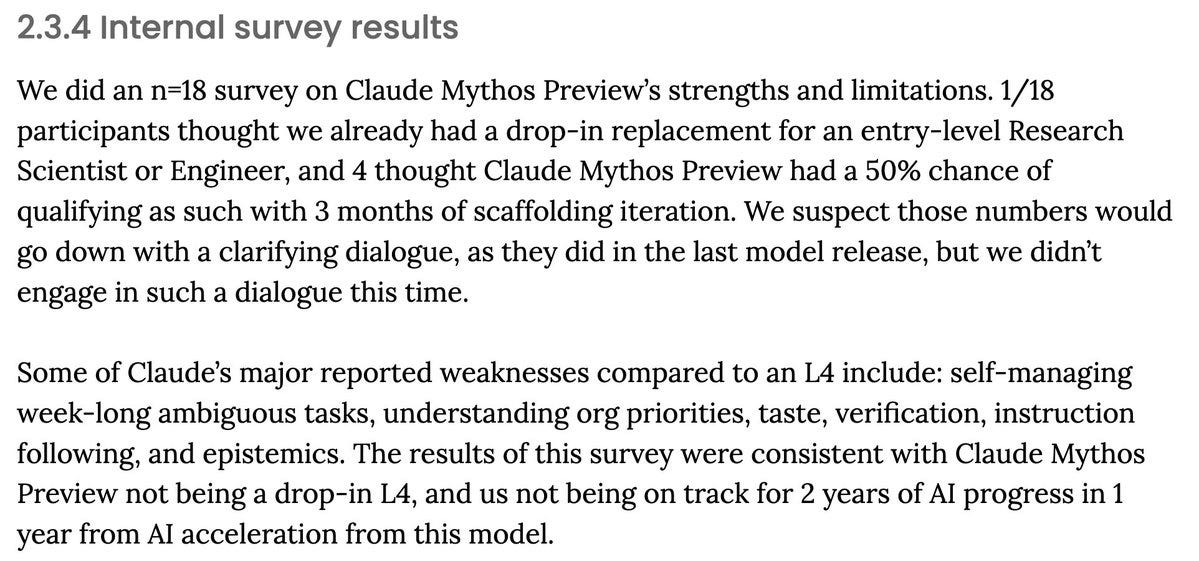
Expanding on the n=18 survey: 5/18 people think Mythos, with 3 months of scaffolding iterations, could drop-in replace an entry-level Research Engineer or Scientist. As with the initial results from Opus 4.6 I agree with Anthropic that people are overestimating capabilities, but still very much worth noting!
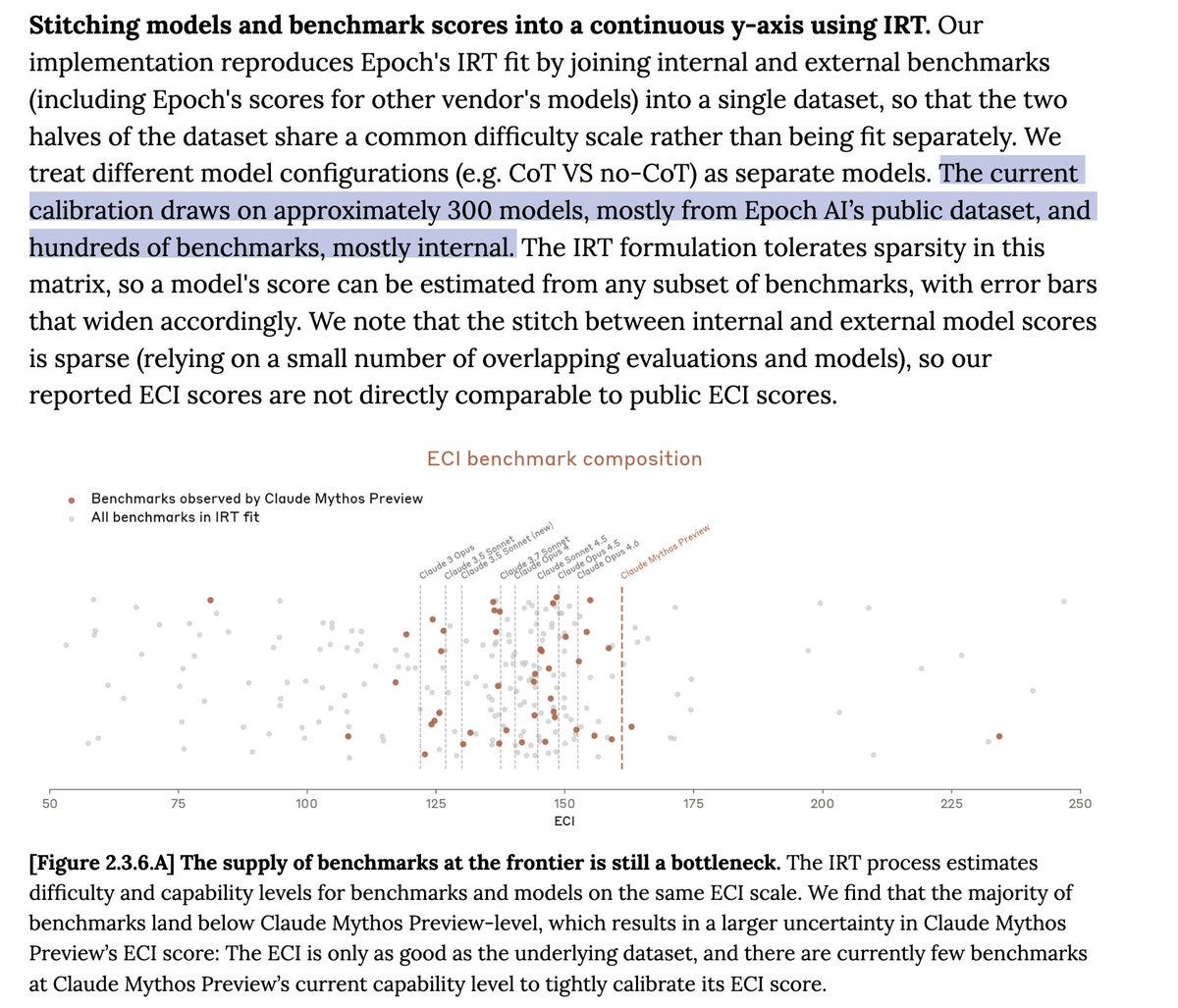
Interesting to see that:
(a) they have so many internal benchmarks used in their internal ECI
(b) that they have a bunch at very high ECI levels, which means that they’re predicted to have models not be at 50% until models are vastly better than current ones
(c) Only one benchmark significantly above Mythos’ 50%-level was included in Mythos’s actual ECI calculation (assuming “observed” means included)
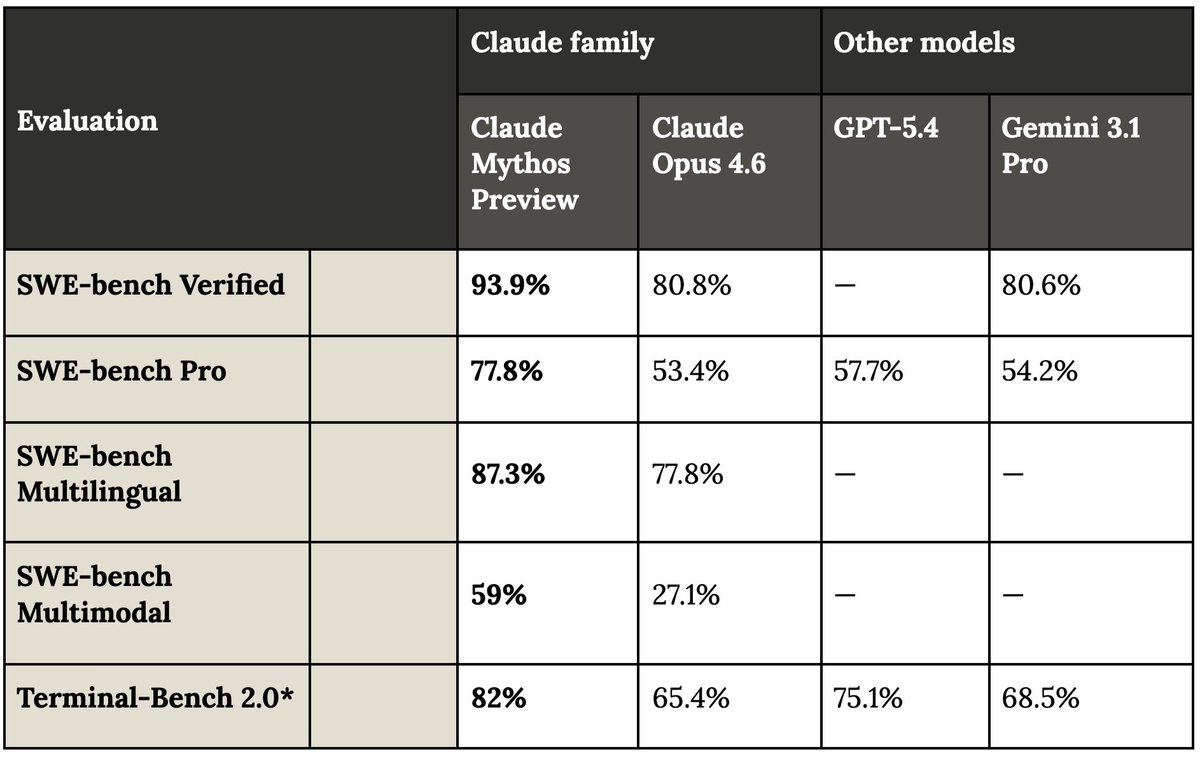
Mythos crushes Opus on coding benchmarks. We'll see just how badly it saturates METR's time horizon suite.
Meanwhile from the Project Glasswing announcmenet post, Mythos has been doing some pretty crazy cyber stuff:
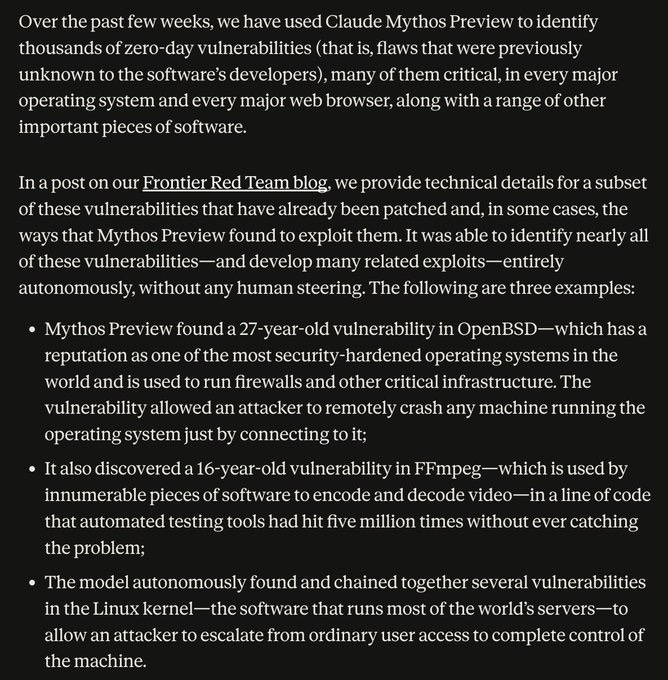
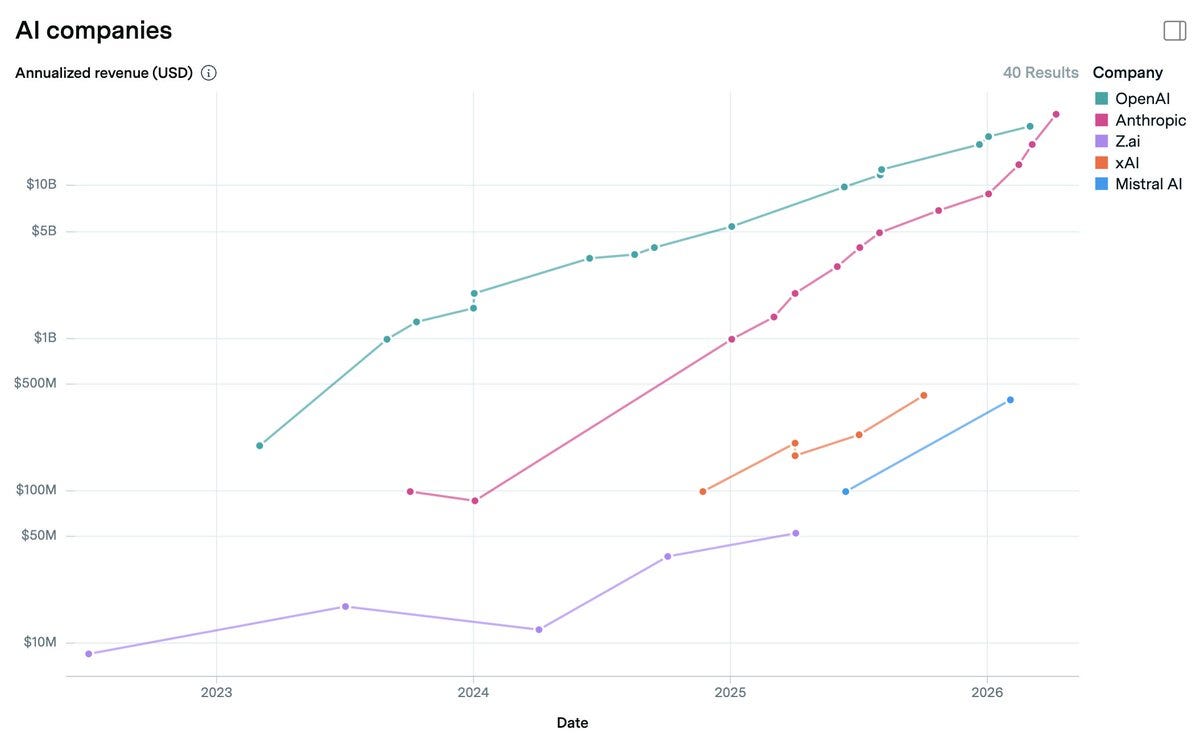
Also, friendly reminder that Anthropic grew from $9B to $30B ARR over the last 3 months. Might be good to pay attention to what they're doing.
Kudos to Anthropic for publishing hundreds of pages for us to pore through, and apologies if I misread anything.
System card: https://www-cdn.anthropic.com/53566bf5440a10affd749724787c8913a2ae0841.pdf
Glasswing announcement: https://anthropic.com/glasswing
Alignment risk update: https://www-cdn.anthropic.com/79c2d46d997783b9d2fb3241de43218158e5f25c.pdf (lots of juicy stuff in there, in case you aren't yet terrified by the capabilities improvements alone...)
Public ECI: https://epoch.ai/benchmarks/eci/
The previous post and this post were great post! Very informative. I did have some questions and concerns. Some these questions I asked previously and are also for Danie so sorry if their are repeats or confusion.
(1). In a previous post that saw an update of the timelines you both mention that “… some AI company researchers that we respect continue to say that automated AI R&D is coming soon; sooner, in fact, than we ourselves think. Rather than walking back their predictions, they are doubling down, both in public and in private discussions. While we don’t put too much weight on such claims, noting that many other researchers have longer timelines, it does count for something.” I am wondering why you both don’t put too much weight on these claims?
(2). I noticed on the interactive AI Futures Model: Forecast page: https://www.aifuturesmodel.com/forecast/daniel-04-02-26?show=atc, that Daniel’s modal years for the superhuman coder is October 2027, the superhuman ai researcher is August 2027, superintelligent ai researcher is November 2027, TED-AI is November 2027 and ASI is January 2028. Daniel doesn’t the superhuman ai researcher come after the superhuman coder? And doesn’t the superintelligent ai researcher come after TED-AI?
(3). Where do both of you stand in regard to the likelihood of “a drop in remote worker”?
(4). You say that capabilities for Claude Mythos were not as surprising as originally anticipated? Why do say this?
(5). I am curious if you have a prediction about what Claude Mythos’s 50% time horizon might be?
(6). In the post (https://substack.com/@ajeyacotra/note/p-193047342?r=6lp84s&utm_medium=ios&utm_source=notes-share-action) by Ajeya Cotra about adequacy, parity and supremacy as it relates to AI research and AI production, what would you consider the equivalent is to both the Automated Coder and TED-AI or AGI?
The deeper issue is not whether Mythos has formally crossed a threshold, but whether threshold-based governance is even the right frame once AI is materially participating in AI R&D.